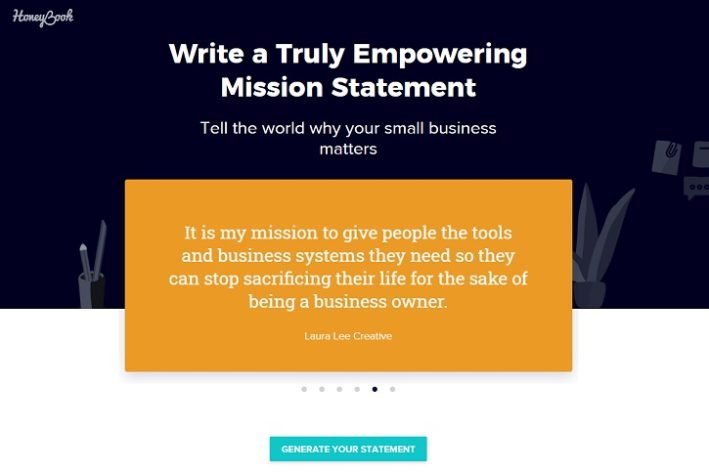
Defining your organization's heart and soul can feel like trying to bottle lightning. It's the critical exercise of distilling purpose, values, and vision into a succinct, memorable statement that guides every decision. For many, this process is daunting, filled with blank pages and endless committee meetings. But what if there was a smarter way to kickstart this crucial work? That's where Mission Statement Generators: Tools & Techniques powered by artificial intelligence enter the arena, offering a dynamic new approach to articulating your core identity.
These aren't just fancy word scramblers; modern AI mission statement generators leverage sophisticated algorithms to transform your raw ideas into polished, impactful declarations, dramatically cutting down the time and effort traditionally involved. They empower you to move beyond generic platitudes and craft a statement that truly resonates.
At a Glance: Your Takeaways on AI Mission Statement Generators
- What they are: AI-powered tools that help you craft concise (10-30 words), unique mission statements for various purposes.
- How they work: You input key organizational details, choose a tone, and the AI generates tailored options for you to refine.
- Who benefits: Teams, SMEs, freelancers, and non-profits seeking clarity, cohesion, and a strong brand identity.
- Key advantage: Personalization, avoiding generic templates, and enabling rapid iteration to find the perfect phrasing.
- Beyond companies: Can also generate personal, brand value, team, and project mission statements.
- The human touch remains vital: AI provides a powerful starting point, but your unique insights and final review are indispensable.
Why a Mission Statement Matters (Beyond the Buzzwords)
Before diving into the "how," let's revisit the "why." A mission statement isn't just a corporate cliché; it's a strategic linchpin. At its core, it's a brief explanation, typically 10-30 words, of an organization's specific purpose. Think of it as your North Star, defining what you do, for whom, and what makes you distinctive.
It’s more than just a catchy phrase; it's a foundational document that serves multiple critical functions:
- Internal Cohesion: It unites your team under a common banner, fostering a shared sense of purpose and direction. Everyone knows why they're showing up each day.
- Strategic Guidance: It informs your long-term objectives and decision-making. Does a new project align with your mission? If not, it might be a distraction.
- Value Proposition: It clearly communicates your unique value to customers, partners, and stakeholders. What problem do you solve? What unique benefit do you offer?
- Brand Identity: It's a concise expression of your brand's essence, differentiating you in a crowded market.
A good mission statement is vital, unique, and concise. It’s a powerful tool, yet many organizations struggle to articulate one that truly captures their essence without sounding bland or overly complex.
The Traditional Hurdle: Why Crafting a Mission Statement is Hard
If crafting a mission statement is so important, why do so many organizations procrastinate or end up with something forgettable? The truth is, it's genuinely challenging. You're trying to condense the very soul of an enterprise into a handful of words.
Common pain points include:
- Writer's Block: Staring at a blank page, overwhelmed by the sheer scope of what needs to be said.
- Too Many Cooks: Collaborative efforts can devolve into endless debates over semantics, leading to watered-down, consensus-driven statements that lack punch.
- Genericitis: Falling back on vague, industry-agnostic language that could apply to almost any business. "To provide excellent customer service" isn't a mission; it's a basic expectation.
- Lack of Clarity: Difficulty pinpointing the organization's unique value proposition or core objectives, resulting in confusing or overly long statements.
- Time Constraints: The strategic work of crafting a mission statement often gets pushed aside by more immediate operational demands.
These challenges are precisely where the new generation of AI-powered mission statement generators offers a game-changing solution.
Enter AI: The New Frontier for Mission Statements
Imagine having a brainstorming partner who never tires, holds an encyclopedic knowledge of effective mission statements, and can instantly generate dozens of unique options tailored to your specific needs. That’s essentially what an AI mission statement generator provides. These tools leverage advanced artificial intelligence algorithms to help you articulate your organization's core purpose with unprecedented speed and precision.
They don't just fill in blanks; they analyze your inputs, understand context, and synthesize language to produce unique, impactful, and tailored content. It's about empowering you to define your vision without getting bogged down in the mechanics of phrasing.
What Exactly Is an AI Mission Statement Generator?
At its heart, an AI mission statement generator is a sophisticated online tool designed to assist individuals and organizations in drafting compelling mission statements. Instead of relying on rigid templates or human-curated examples, these generators utilize large language models (LLMs) and natural language processing (NLP) to understand your input and craft custom text. They act as intelligent co-authors, streamlining the creative process and helping you overcome common linguistic hurdles. You can quickly Generate your mission statement and move on to implementing it.
How AI Mission Statement Generators Work: Your Step-by-Step Playbook
The beauty of these AI tools lies in their straightforward, intuitive process. While specific interfaces might vary, the underlying methodology remains remarkably consistent, allowing you to go from concept to coherent statement in minutes.
Here’s a typical workflow:
1. Inputting Your Core Vision: What the AI Needs to Know
This is the most critical step, as the quality of the AI's output directly correlates with the specificity and richness of your input. Think of it as coaching your intelligent assistant. You'll typically be prompted to enter key information about your organization:
- Organization's Name: Simple but essential for personalization.
- Industry: Helps the AI understand relevant terminology and context (e.g., tech, healthcare, retail).
- Spirit/Culture: Describe your company's vibe—innovative, community-focused, results-driven, playful?
- Vision: Where do you see your organization in the future? What ultimate impact do you want to make?
- Values: What principles guide your actions? (e.g., integrity, sustainability, customer-centricity).
- Core Offerings: What products or services do you provide?
- Target Audience: Who are you serving? (e.g., small businesses, healthcare professionals, eco-conscious consumers).
- Unique Value Proposition (UVP): What makes you different or better than competitors? This is your secret sauce.
The more detail and clarity you provide here, the less generic and more impactful the generated statements will be. Avoid jargon where plain language works better, but don't shy away from your specific industry terms if they're crucial.
2. Tailoring the Output: Customization Options
Once you've provided the foundational information, many generators offer customization options to refine the statement further:
- Tone: Do you want it inspiring, authoritative, empathetic, innovative, or friendly?
- Length: Often a range, like 10-30 words, allowing you to control conciseness.
- Focus: Emphasize certain aspects, such as customer benefit, innovation, or social impact.
- Keywords: Suggest specific words or phrases you want to include or avoid.
These options act as powerful filters, guiding the AI to produce statements that align precisely with your communication goals and brand voice.
3. Generate Results: Let the AI Do the Heavy Lifting
With your inputs and preferences locked in, you simply click the "Generate" button. In moments, the AI will present you with several distinct mission statement variations. These aren't minor tweaks of a single idea; typically, they represent different angles or phrasings based on your initial information.
4. The Iterative Process: Refine Until Perfect
This is where the human touch re-enters the scene with force. You'll examine the generated statements for accuracy, impact, and emotional resonance.
- Review: Read each statement carefully. Does it truly capture your organization's purpose? Is it clear, concise, and compelling?
- Iterate: If you’re not entirely satisfied, don’t settle! Modify your initial instructions or customization options and regenerate. Perhaps a different tone is needed, or a specific value needs more emphasis. This iterative process is a huge advantage over traditional methods, allowing for rapid experimentation without starting from scratch each time. You might explore how to develop a mission statement that truly sets you apart.
5. Copy & Integrate: Your Vision, Amplified
Once you've landed on the perfect mission statement, you can easily copy and paste the text. From there, it's ready for integration across all your platforms: your website's "About Us" page, social media profiles, marketing materials, internal onboarding documents, and investor pitches. A clear mission statement becomes a vital part of your communication strategy, so don't delay in making it visible.
Beyond Generic: How Advanced AI Delivers Unique Value
Not all AI generators are created equal. While many offer basic functionality, the truly advanced tools stand out by offering deeply personalized, non-generic outputs. This differentiation is critical, especially when you consider the stakes of defining your organization's core purpose.
The "No Templates" Advantage
Many older or simpler generators might rely on a library of pre-written templates, slightly tweaked with your keywords. The result? Statements that feel impersonal, predictable, and frankly, forgettable. Advanced AI, like that found in tools such as UPDF AI's Mission Statement Generator, avoids this pitfall entirely. By analyzing specific business details, spirit, values, and vision, these tools don't use templates; they compose original content. This ensures your mission statement is unique to your organization, reflecting its genuine identity rather than a recycled structure.
Powering Precision: The AI Models Under the Hood
The sophistication of the underlying AI model directly impacts the quality of the output. While many generators might use older or more generalized AI, leading to verbose or less insightful suggestions, cutting-edge tools are powered by advanced language models. For instance, some generators use models like GPT-5 by default, with options to switch to specialized models like DeepSeek R1 for stronger reasoning capabilities. This ensures the AI can understand complex nuances, infer context, and generate highly relevant and articulate statements, moving beyond mere keyword matching to true semantic understanding. This capability makes it easier than ever to craft your mission statement with precision.
Conciseness and Clarity: Hitting the Sweet Spot (10-30 words)
A truly effective mission statement is concise. It's easy to remember, repeat, and understand. Many AI tools are specifically engineered to produce statements within a tight word count, often 10-30 words. This forces clarity and eliminates fluff, ensuring your message is punchy and impactful. While other generators might produce verbose output, the best ones prioritize brevity without sacrificing depth.
Global Reach: Multilingual Support
In today's interconnected world, an organization's mission might need to resonate across diverse linguistic landscapes. Advanced AI mission statement generators often support an extensive range of global languages. This feature is invaluable for international businesses, allowing them to generate culturally relevant and accurate mission statements in multiple languages, fostering a truly global brand identity. This level of support often goes beyond what basic, older AI models can provide.
Who Benefits Most from AI Mission Statement Generators?
The utility of these tools extends far beyond large corporations. Their ability to distill complex ideas into clear, concise statements makes them indispensable for a diverse range of users.
Teams & Small to Medium Enterprises (SMEs)
For businesses of all sizes, clarity is currency. AI mission statement generators are particularly useful for:
- Strategic Decision-Making: Providing a clear compass that guides growth and operational choices.
- Establishing Clear Cohesion: Ensuring all team members are aligned with the company's core purpose, fostering unity and productivity.
- Providing Direction for Long-Term Development: Acting as a foundational document against which all future plans can be measured.
- Faster Onboarding: Quickly communicating the company's "why" to new hires.
For SMEs, which often lack the extensive resources or dedicated strategic teams of larger enterprises, these tools offer an efficient, cost-effective way to articulate their vision without extensive external consulting.
Freelancers & Personal Brands
In the gig economy, a strong personal brand is paramount. Freelancers are essentially their own businesses, and a mission statement can be just as crucial for them:
- Explore Personal Core Strengths: Helping individuals articulate what they do best and what unique value they bring.
- Inspire Growth: Providing a personal guiding principle that motivates and informs career decisions.
- Build Unique Personal Brands: Crafting a memorable statement that differentiates them in a competitive market and clearly communicates their professional identity to potential clients.
A well-crafted personal mission statement can be a powerful tool for self-reflection and external communication, establishing your expertise and passion.
Non-Profit Organizations (NPOs)
NPOs thrive on purpose and impact. A strong mission statement is not just helpful, it's essential for their very existence:
- Conveying Core Values: Clearly articulating the beliefs and principles that drive their work.
- Defining Social Responsibilities: Stating the specific societal problems they aim to address and their commitment to solving them.
- Maximizing Positive Societal Impact: Attracting donors, volunteers, and beneficiaries by clearly communicating their purpose and the change they aim to create.
- Grant Applications: A concise and impactful mission statement is often a requirement for funding and acts as a powerful summary of the organization's goals.
For NPOs, an AI generator can help streamline the process of articulating their often complex social objectives into an easily digestible and emotionally resonant message, aiding fundraising and public awareness efforts. If you're struggling, these tools can help you build your mission statement with impact.
Expanding Your Statement Portfolio: More Than Just Company Missions
The utility of AI generators isn't limited to a single "company mission statement." Their underlying flexibility allows them to assist with articulating purpose across various scales and contexts:
- Personal Mission Statements: A guiding philosophy for your life and career, much like freelancers use them for their brand.
- Non-Profit Organization Missions: As discussed, crucial for defining social impact.
- Brand Value Propositions: While related to a mission, these often focus more acutely on the unique benefits and value delivered to the customer.
- Team Mission Statements: For specific departments or project teams within a larger organization, clarifying their unique contribution to the overall company mission.
- Project Mission Statements: A concise statement outlining the purpose and key objectives of a particular project, aligning team efforts and stakeholder expectations.
This versatility makes these tools incredibly valuable for individuals and organizations needing clarity at any level.
Choosing Your AI Co-Pilot: What to Look For in a Generator
With a growing number of AI mission statement generators available, how do you pick the right one? Focus on features that deliver genuine value and help you avoid common pitfalls.
- Personalization & Template Avoidance: This is paramount. Does the tool genuinely analyze your inputs to create unique content, or does it merely fill in blanks within predefined structures? Look for generators that explicitly state they don't use templates.
- AI Model Sophistication: Newer, more advanced AI models (like GPT-4/5 or specialized alternatives) generally offer better understanding, reasoning, and linguistic quality. If the tool mentions its underlying AI, that's often a good sign of its capabilities.
- Iterative Refinement Capabilities: Can you easily modify your inputs, adjust tones, or tweak specific keywords and regenerate new options? This flexibility is crucial for fine-tuning.
- User Experience: Ads, Free Trials, Language Support:
- Ad-Free Experience: Ads can be distracting during a strategic creative process. A clean interface indicates a more professional tool.
- Generous Free Trials: A limited free trial (e.g., 100 queries) allows you to thoroughly test the tool before committing, unlike those with very restrictive limits.
- Broad Language Support: If your operations or audience are global, multilingual support is a significant advantage.
- Conciseness Control: Can you specify the desired length, aiming for that ideal 10-30 word range? Verbose output defeats the purpose of a mission statement.
- Additional Features:
- SEO-Optimized Phrasing: While mission statements aren't primarily for SEO, incorporating relevant terminology can still be beneficial.
- Collaborative Editing: For teams, built-in commenting and revision tools can streamline the review process.
- Industry-Specific Templates (as a guide, not a straitjacket): While avoiding generic templates is good, some tools offer industry-specific prompts or examples that can spark ideas without dictating the final output.
Pitfalls to Avoid: Don't Let the AI Lead You Astray
AI is a powerful assistant, but it's not a replacement for human insight and judgment. To get the most out of these generators, be mindful of potential pitfalls:
- Blindly Accepting Output: Never publish an AI-generated statement without thorough human review. It needs to feel authentic to you and your organization.
- Generic Inputs = Generic Outputs: The AI can only work with what you give it. If your inputs are vague or uninspired, the outputs will reflect that. Spend time defining your unique attributes before you prompt the generator.
- Over-reliance on the First Draft: The iterative process is there for a reason. Don't stop at the first few suggestions. Experiment, refine, and push for perfection.
- Losing Your Voice: The AI should amplify your voice, not replace it. Ensure the final statement genuinely sounds like your organization and resonates with its culture.
- Forgetting the "Why": The mission statement is a tool for strategic alignment. Don't treat it as a standalone marketing slogan. It needs to be deeply rooted in your purpose.
Crafting the Perfect Prompt: Getting the Best from Your AI Generator
Think of your prompt as the raw material the AI sculpts. The better your material, the better the sculpture. Here’s how to optimize your inputs:
- Be Specific, Not Vague: Instead of "We make software," try "We develop intuitive project management software for small creative agencies to streamline workflows and boost collaboration."
- Highlight Your Uniqueness: What's your differentiator? "We're the only local bakery specializing in gluten-free, artisanal sourdough using ancient grain starters."
- Define Your Impact: What change do you want to see? "Our goal is to empower underserved communities through accessible digital literacy programs."
- Inject Your Personality: Use adjectives that describe your brand's spirit. "Our spirit is innovative and user-centric," or "We're a compassionate and community-driven non-profit."
- Iterate on Your Input: If the first set of results isn't quite right, don't just regenerate. Go back and refine your input details. Add more context, change a keyword, or rephrase your vision.
By consciously crafting your prompts, you transform the AI from a simple word generator into a sophisticated thought partner, helping you express your deepest aspirations with clarity and precision. You can explore how to build a compelling mission statement with these techniques.
Integrating Your Mission: Where to Put It (and Why It Matters)
Once you've honed your perfect mission statement, it's not just a document to file away. It's a living statement that needs to be prominently displayed and actively used.
- Website & Marketing Materials: Your "About Us" page, brochures, and pitch decks are prime real estate. It's often the first thing potential customers or partners look for to understand your core.
- Internal Communications: Display it in your office, on internal wikis, and in onboarding documents. A consistent reminder reinforces internal cohesion.
- Strategic Planning: Use it as a litmus test for new initiatives, product development, and market expansions. Does this align with our mission?
- Recruitment: Attract talent that resonates with your purpose. A strong mission statement speaks volumes about your company culture and values.
Making your mission statement visible and actionable reinforces its importance and ensures it genuinely guides your organization's trajectory.
Final Polish: Human Touch in an AI-Generated World
The advent of AI mission statement generators marks a significant leap forward in strategic communication. These tools demystify the process, democratize access to high-quality drafting, and accelerate iteration. They liberate you from the blank page and writer's block, offering a powerful starting point—or even a refined final draft—in a fraction of the time.
However, the ultimate success of your mission statement still rests with you. The AI is a co-pilot, not the captain. It provides the words, but you infuse the soul. Use these tools to kickstart your creativity, explore diverse phrasing, and achieve unparalleled conciseness. Then, bring your unique human perspective, your emotional intelligence, and your intimate knowledge of your organization to deliver the final polish.
Your Next Step to Clarity
Don't let the crucial task of defining your purpose be a roadblock. Leverage the power of Mission Statement Generators: Tools & Techniques to cut through the complexity. Take your core ideas, feed them into an intelligent AI co-pilot, and watch as your vision takes concise, compelling form. Begin by gathering your organization's key details—its purpose, values, vision, and unique offerings. Then, explore an advanced AI generator to quickly generate your mission statement and begin the journey of internal alignment and external impact. The clarity you gain will be invaluable.